What This Guide Covers
- Two Words, Three Meanings, One Confused Homeowner
- What Soft Washing Does That High Pressure Cannot
- How Pressure Washing Works and Which Surfaces Can Take It
- Soft Washing vs Pressure Washing: A Surface by Surface Breakdown
- Why Delaware Humidity Changes the Answer
- The Damage That Shows Up Six Months Later
- Choosing Soft Washing vs Pressure Washing for Your Own Exterior
- What This Looks Like on a Real Delaware Job
- Is soft washing the same thing as power washing?
- Can you pressure wash a vinyl-sided house in Delaware?
- How often should a Delaware home be soft washed?
- What actually causes the black streaks on my roof?
- What affects the cost of exterior washing?
- What should you ask an exterior cleaning company before booking?
- Getting the Method Right the First Time
Direct Answer: The difference in soft washing vs pressure washing comes down to force: soft washing cleans siding, roofs, and painted surfaces with low pressure and detergents, while pressure washing uses high-pressure water on hard surfaces like concrete and brick.
Two Words, Three Meanings, One Confused Homeowner
Call three exterior cleaning companies in New Castle County and you will hear three different words for what sounds like the same job. One says power washing. One says pressure washing. One says house washing or soft wash. The terms get used loosely, and that is where people get into trouble.
Soft washing vs pressure washing is not a branding difference. It describes two genuinely different processes. One relies on water hitting a surface hard enough to knock contamination off. The other relies on a cleaning solution sitting on the surface long enough to kill what is growing there, followed by a gentle rinse.
This guide covers three things: how each method physically works, which Delaware surfaces belong in which category, and the damage high pressure causes on siding and shingles, including the kind that stays hidden for months. Want a straight answer for your own house? Tell us what your exterior looks like.
What Soft Washing Does That High Pressure Cannot
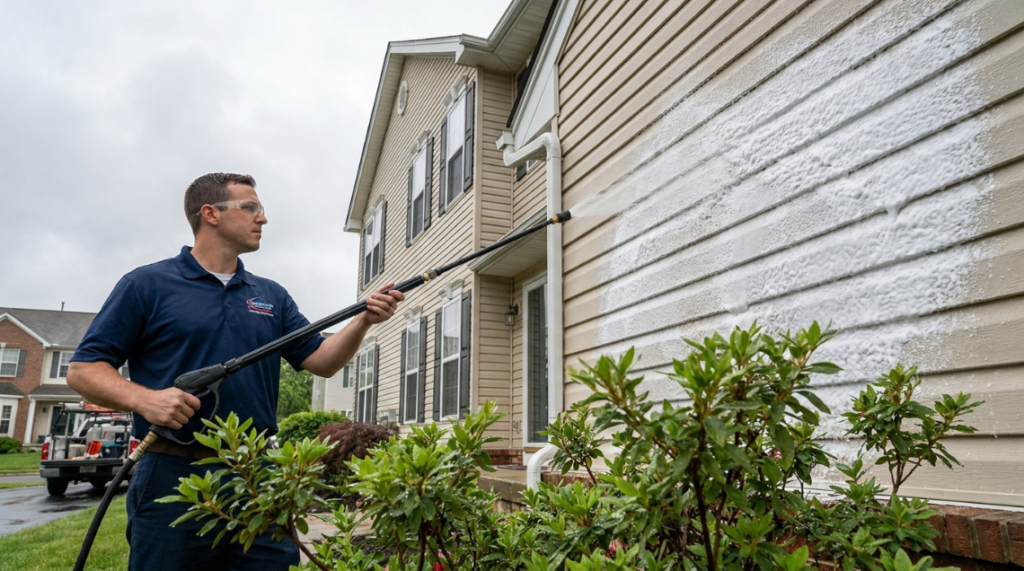
Soft washing cleans by chemistry, not force. A soft wash system applies a biodegradable detergent blend at low pressure, typically 150 to 300 PSI and almost always under 500 PSI, lets it dwell, then rinses everything away with a gentle, high-volume flow.
The active ingredient in most professional mixes is sodium hypochlorite, diluted well below stock strength, combined with surfactants that help the solution cling to a vertical wall. That dwell time is the point. The detergent kills algae, mold, and mildew at the root rather than blasting the visible layer away and leaving the spores behind.
Results hold longer as a result. A treated surface stays clean for roughly 12 to 18 months on siding, and often longer on a roof, because the organism has been killed rather than relocated. That durability gap is one of the strongest arguments in the soft washing vs pressure washing comparison.
There is a real trade-off. Soft washing is slower, and heavy embedded grime on concrete will not respond the way organic growth does. Gentleness is a feature on siding. It is a limitation on a stained driveway.
How Pressure Washing Works and Which Surfaces Can Take It
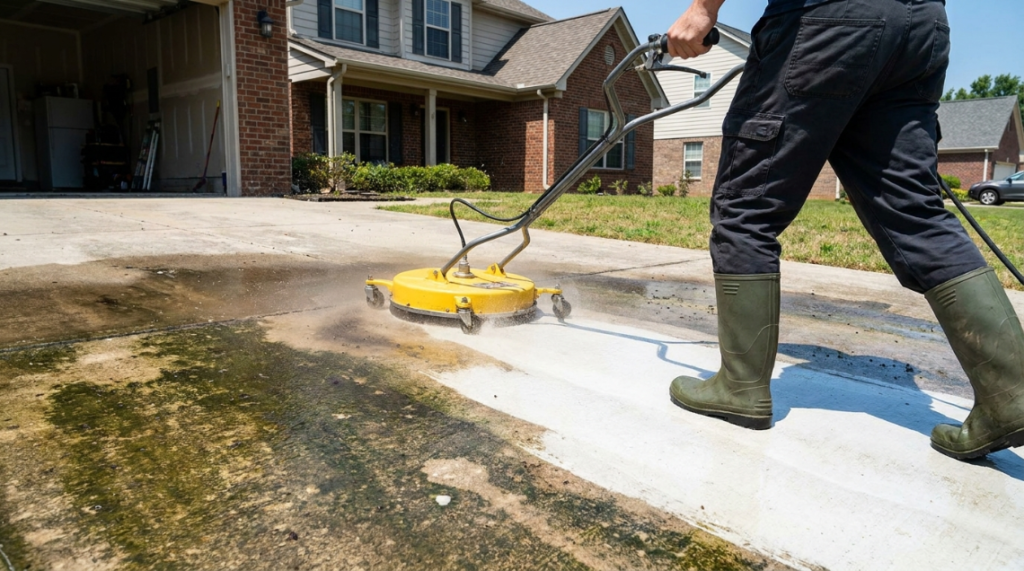
Pressure washing cleans by impact. Water leaves the nozzle somewhere between 1,300 and 3,000 PSI on residential equipment, and commercial machines push higher. That velocity is what strips oil off a garage apron and lifts years of embedded grit out of concrete pores.
On the right surface, nothing beats it. Unsealed concrete, brick pavers, and stone walkways are dense enough to absorb that force without giving anything up. A driveway gone gray and blotchy needs pressure, not patience.
The force is also indiscriminate. Water at 2,000 PSI does not know algae from the mortar between your brick, or dirt from the granules bonded to your shingles. It removes whatever is weakest, and on a house exterior, that is frequently not the dirt.
Fast results on concrete. Permanent marks on siding. That tension is the whole of the soft washing vs pressure washing question, and it is why serious crews carry both setups instead of picking a side.
Soft Washing vs Pressure Washing: A Surface by Surface Breakdown
Match the method to the material and the soft washing vs pressure washing decision gets simple. Here is how the six most common exterior surfaces on a Delaware home sort out.
| Surface | Right method | Typical pressure | What goes wrong with the other method |
|---|---|---|---|
| Vinyl siding | Soft wash | Under 500 PSI | High pressure drives water behind the panels and strips oxidation unevenly, leaving blotchy patches |
| Asphalt shingle roof | Soft wash | Under 500 PSI | Pressure loosens protective granules and can lift shingle edges |
| Stucco and fiber cement | Soft wash | Under 500 PSI | Pressure chips the finish coat and forces moisture into the substrate |
| Concrete driveway and walkway | Pressure wash | 2,000 to 3,000 PSI | Low pressure alone will not lift embedded grit, oil, or tire marks |
| Brick patio and pavers | Controlled pressure | 1,500 to 2,500 PSI | Too much erodes mortar joints and blows out paver sand; too little leaves the stains |
| Wood deck and fence | Soft wash or low pressure | Under 800 PSI | High pressure raises the grain and gouges soft wood, leaving a splintered surface |
One house often needs both. It is normal to soft wash the siding, then switch equipment to pressure wash the driveway on the same visit. Our power washing services page explains which exterior surfaces we take on and how we approach each one.
Why Delaware Humidity Changes the Answer
Delaware pushes more homes toward the gentle method than a drier state would, and the reason is moisture that never really leaves. Wilmington sits in a humid subtropical zone where relative humidity hovers in the 70s all year, moving from about 72% in April to roughly 78% in October.
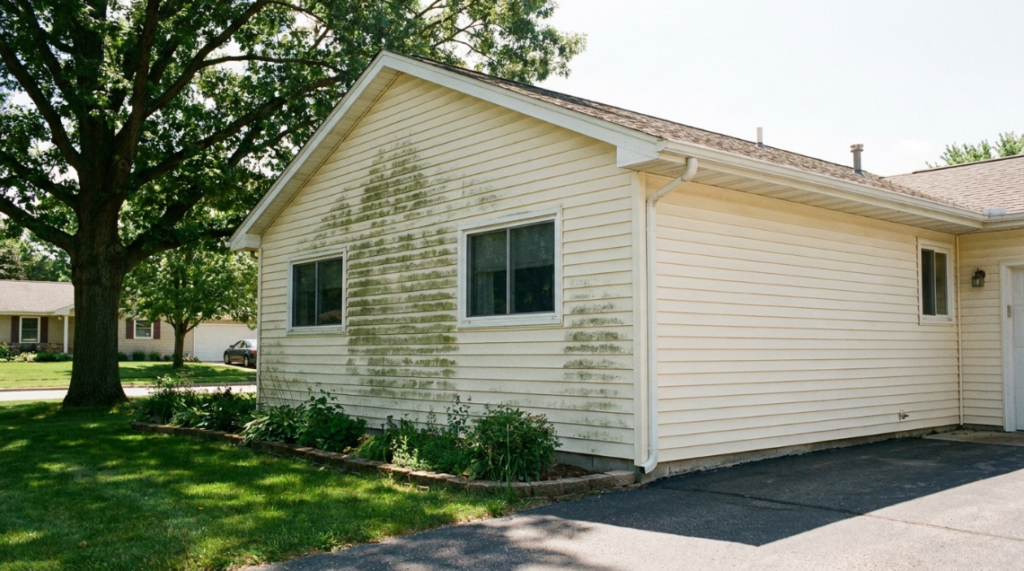
Summer makes it worse. July highs at New Castle Airport average around 86°F, and August is the wettest month with roughly 5.5 inches of rain. Warm, wet, and shaded is the exact recipe algae needs to establish on a north-facing wall.
You can see the pattern on almost any street. On a shaded lot in Greenville or a tree-lined block in Newark, the north side greens up first while the sunny south side still looks fine. Same house, same age, different growth, because one wall stays damp hours longer after every rain.
So a Delaware exterior usually has an organic growth problem, not a dirt problem. That single fact settles most soft washing vs pressure washing debates before they start. Growth responds to detergent and dwell time. Blasting it clears the visible layer and leaves the roots to come back by the next humid stretch.
The Damage That Shows Up Six Months Later
Here is the part most exterior cleaning pages leave out: the worst pressure washing damage is not visible on cleaning day. The house looks great when the crew drives off. The problem is behind the wall.
Siding is built to shed water running down the outside of it. It is not built to stop water fired upward at a few thousand PSI into lap joints, around window seals, and past soffit gaps. Water behind a panel has no easy path out, and in a humid climate it becomes the moisture pocket mold needs. By the time you smell it, the wash that caused it happened two seasons ago.
The same delay applies to shingle granules. Pressure knocks them loose without changing how the roof looks from the ground, and the wear surfaces later as premature aging. This is the cost of getting soft washing vs pressure washing backwards on a roof.
How to keep that from happening to your house:
- Ask which PSI range the crew will use on siding, and expect a number under 500
- Confirm the spray angle stays downward on lap siding, never upward into the seams
- Check that windows, vents, dryer exhausts, and electrical penetrations are covered before the first drop of water
- Ask whether landscaping gets pre-wetted before the solution goes on and rinsed again after
- Ask what they do on a hot day, since letting the mix dry on the wall is a common cause of streaking
The one question worth asking any company you call: “What pressure will you use on my siding, and what will you use on my driveway?” If the answer is the same number for both, keep calling.
Choosing Soft Washing vs Pressure Washing for Your Own Exterior
Walk your property once and sort surfaces into these buckets before you book anything.
- Vinyl or painted siding. Soft wash. Common mistake: renting a machine and assuming the low setting makes it safe. Nozzle choice and distance matter as much as the dial.
- Asphalt shingle roof. Soft wash only. Common mistake: treating black streaks as a stain to scrub instead of an organism to kill.
- Chalky, oxidized siding. Soft wash, with an expectation check first. Rub a hand across it. If you get chalky residue, the outer layer has aged and any wash may reveal uneven fading underneath. Common mistake: not being told this beforehand.
- Concrete driveway and sidewalk. Pressure wash. Common mistake: a narrow zero-degree nozzle, which etches visible stripes into the slab.
- Brick and paver patios. Controlled pressure. Common mistake: over-pressuring joints, which flushes out mortar and paver sand and invites weeds.
- Composite decking. Soft wash, following the manufacturer’s guidance. Common mistake: assuming composite is bulletproof and reaching for full pressure.
When neither method is the right call: peeling paint needs prep and repainting, not washing. A stain running from a rusting fixture or failing gutter seam comes straight back, because cleaning treats the symptom while the source keeps going. And if siding is cracked or a shingle is lifting, water belongs there only after the repair. When a job falls into one of those buckets, we say so.
What This Looks Like on a Real Delaware Job
Picture a scenario of the kind that comes up most often in our service area. A homeowner in Bear has a two-story vinyl-sided colonial with mature trees along the north property line. The north wall has gone green over two summers, the driveway has darkened, and a neighbor recommended someone who quoted the whole exterior at one pressure. That quote ignores soft washing vs pressure washing entirely.
Done that way, the driveway comes out excellent and the siding comes out damaged, with water pushed behind lap joints on a wall that already stays damp longer than the rest of the house.
Handled correctly, that address is two operations on one visit. The siding gets a low-pressure detergent application, dwell time, and a rinse, with foundation shrubs soaked before and after. The concrete gets a surface cleaner at working pressure with a fan nozzle, never a pinpoint one.
That method-first habit is the thread running through our feedback. The recurring theme homeowners raise on our Google Business Profile and in our Yelp listing is thoroughness and showing up when we said we would, which counts double on exterior work.
Frequently Asked Questions
Is soft washing the same thing as power washing?
No. Power washing and pressure washing describe the same high-pressure method, usually 1,300 to 3,000 PSI. Soft washing runs under 500 PSI and relies on detergent dwell time to kill organic growth. If a company uses all three words for one service, ask which pressure goes on your walls.
Can you pressure wash a vinyl-sided house in Delaware?
You can, and it is a common way to damage a house. Vinyl sheds water running down it, but high pressure aimed into lap joints forces water behind the panels, where Delaware humidity traps it. It also strips aged oxidation unevenly, leaving a wall patchier than before.
How often should a Delaware home be soft washed?
Most homes do well on a 12 to 24 month cycle. Properties with heavy shade or a north wall that stays damp often need service closer to once a year, which describes plenty of lots in Newark and Greenville. The honest test is visual: when the north side looks different from the south side, you are due.
What actually causes the black streaks on my roof?
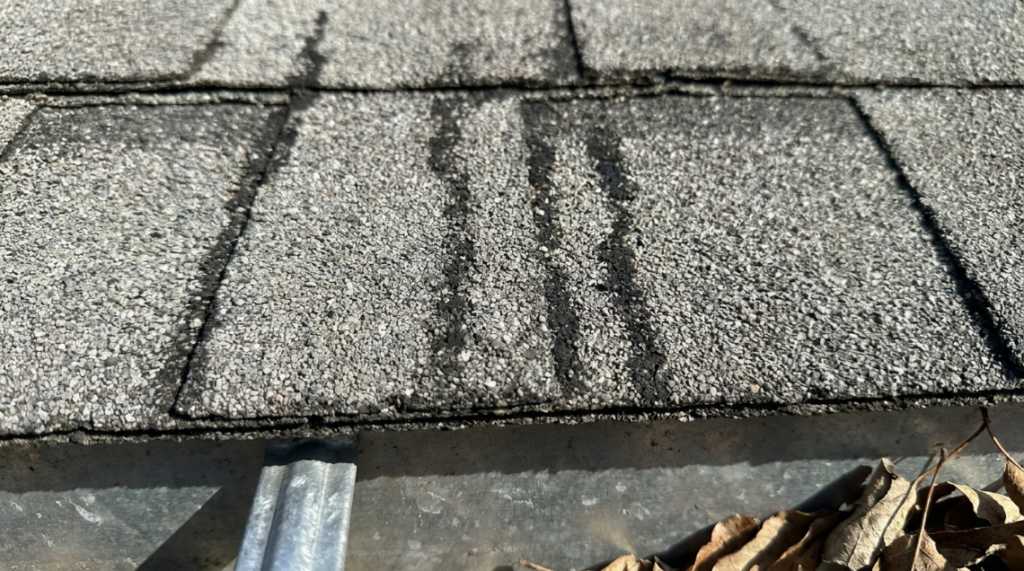
Those streaks are a cyanobacteria called Gloeocapsa magma, not dirt or soot. It feeds on the limestone filler in asphalt shingles and produces a dark sheath against UV light, which is why it reads as black. It starts on shaded, north-facing planes and spreads by airborne spores, so whole neighborhoods streak together. The Asphalt Roofing Manufacturers Association notes there is no scientific evidence it directly damages shingles.
What affects the cost of exterior washing?
Several factors move it, and any company quoting sight unseen is guessing. Square footage and number of stories drive most of it, since second-story work needs long-range equipment. Surface type matters, because a roof, siding, and concrete each need different setups. Severity of growth affects dwell time, and tight landscaping adds protection work first.
What should you ask an exterior cleaning company before booking?
Ask four things. What PSI will you use on each surface? Is the crew licensed and insured for exterior work? How do you protect landscaping and handle runoff? And what should I expect on oxidized siding? Our FAQ page covers scheduling, access, and our satisfaction policy.
Getting the Method Right the First Time
Your house is not one surface. It is siding that needs chemistry, concrete that needs force, and a roof that needs to be left alone by anything with real pressure behind it. Soft washing vs pressure washing is never about which method wins in general. It is about which one belongs on which part of your property, and settling that before anyone unrolls a hose is what separates a clean exterior from a repair bill.
If your north wall has gone green or your driveway has gone gray, we serve homes across Delaware, Pennsylvania, and New Jersey and can walk you through the soft washing vs pressure washing call for your specific surfaces. Reach out and describe your exterior, or find us on Nextdoor, where your neighbors have already weighed in.