
Table of Contents
- What Counts as a Large Home on the Main Line?
- Why Square Footage Alone Does Not Set Your Scope
- House Cleaning Large Homes Main Line PA: The Six Factors That Set Your Scope
- How Long Does It Take to Clean a 5,000 Square Foot House?
- Where a Full Scope Clean Makes Sense, and When It Does Not
- What a Large Home Clean Looks Like in Practice
- Is a deep clean the same as a large home cleaning?
- Can you skip unused rooms in a large house to shorten the visit?
- How often should a large Main Line home be professionally cleaned?
- Why does the first cleaning of a large home take so much longer?
- What determines the scope of a large home cleaning?
- What should you ask a cleaning company before booking a large home?
- Booking Your First Visit
Direct Answer: For house cleaning large homes Main Line PA residents book, six factors set the scope, not square footage alone: floor area, number of levels, bathroom count, specialty surfaces, household occupancy, and time since the last professional clean.
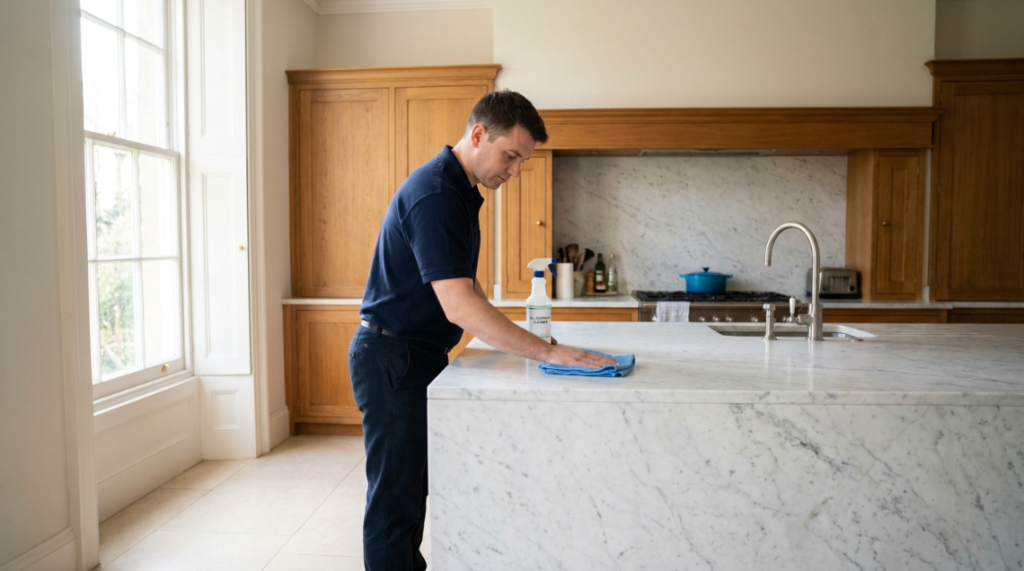
You called three cleaning companies. All three asked for the square footage, quoted a time window, and moved on. Then the crew arrived, found a third floor, two staircases, five bathrooms and an unsealed slate entry, and the day ran long. That gap between what was scoped and what the house needed is the complaint we hear most from homeowners in Bryn Mawr, Villanova and Wayne.
Part of the confusion is vocabulary. A “deep clean” and a “recurring clean” describe how thorough the work is. Neither describes how big or how complicated the house is. A 6,000 square foot Colonial on a recurring schedule can involve more labor than an 1,800 square foot townhouse getting a full deep clean.
This article covers three things: what defines a large home here and why Main Line housing stock behaves differently from newer construction, the six factors that change the scope, and how long the work realistically takes. If you would rather talk it through, tell us about your home and we will schedule a walkthrough.
What Counts as a Large Home on the Main Line?
Most cleaning companies treat 3,000 square feet as the line where a house becomes a large home, though some set it closer to 2,500. Above that threshold, one cleaner on a standard shift can no longer finish the house in a single visit, so the job shifts from one person moving room to room into a crew working zones at once. That is a different service, not just a longer one.
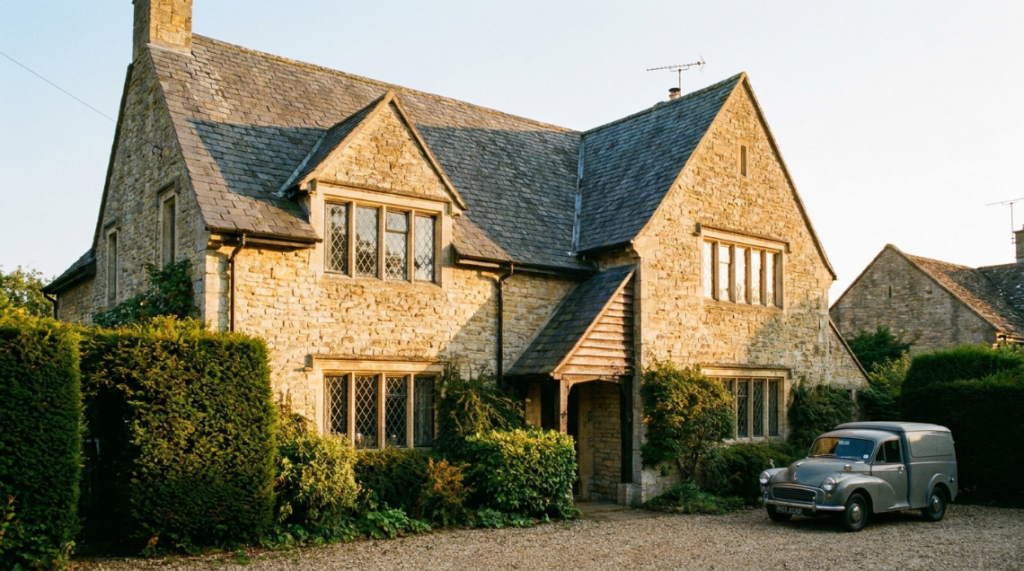
The Main Line is not a single town. It is a string of suburbs west of Philadelphia that grew along the original route of the Pennsylvania Railroad in the 1800s, covering Bryn Mawr, Haverford, Villanova, Radnor, Wayne, Gladwyne, Malvern and Paoli. They share a housing pattern: stone manors, Tudor revivals and older Colonials, many built before 1940.
That history matters. A 1920s stone house in Haverford has deep window sills that hold dust, a service staircase in addition to the main one, radiators instead of forced air vents, and original hardwood that will not tolerate a wet mop. A 2015 build of the same square footage has none of those. This is why cleaning a large home on the Main Line is rarely interchangeable with the same job in newer construction.
Why Square Footage Alone Does Not Set Your Scope
Square footage is a weak predictor of cleaning time. A large share of the work in any house happens across the whole property rather than inside individual rooms: floors, stairs, baseboards, high dusting, glass, and hauling equipment between levels. That work happens whether you have four bedrooms or seven.
Here is the part that surprises people. Removing a bedroom from the scope barely shortens the visit, because most of the labor sits in the kitchen, the bathrooms and the floors. Industry data on cleaning time consistently shows a large, well organized home finishing faster than a smaller home packed with clutter. Clutter, not floor area, is the real time cost.
The reason is mechanical. Cleaning time is driven by how many surfaces a technician has to touch and how many transitions there are between tasks, not by the volume of the house. A 5,000 square foot open floor plan with three bathrooms has fewer touchpoints than a 4,000 square foot house with six bathrooms and a finished basement.
What you can do about it:
- Ask for a walkthrough, not a phone estimate. Anyone scoping your home from square footage alone is guessing.
- Count bathrooms and levels out loud when you first call. These two numbers change the plan more than total area does.
- Flag specialty surfaces up front: marble, natural stone, unsealed hardwood, slate, brass fixtures.
- Clear surfaces before the crew arrives if you want the hours spent on cleaning rather than on moving objects.
- Tell them the truth about the last professional clean. A house that has gone six months will not behave like one cleaned last week.
One question is worth asking every company you call: what specifically about my house would make this visit run longer than you estimated? A provider who has worked in older Main Line homes will have a fast, specific answer.
House Cleaning Large Homes Main Line PA: The Six Factors That Set Your Scope
Six variables account for nearly all of the difference between a smooth visit and one that runs over. Read them as a checklist for your own house.
- Total floor area. Sets the baseline crew size and nothing else. Common mistake: treating it as the whole answer and skipping the rest of this list.
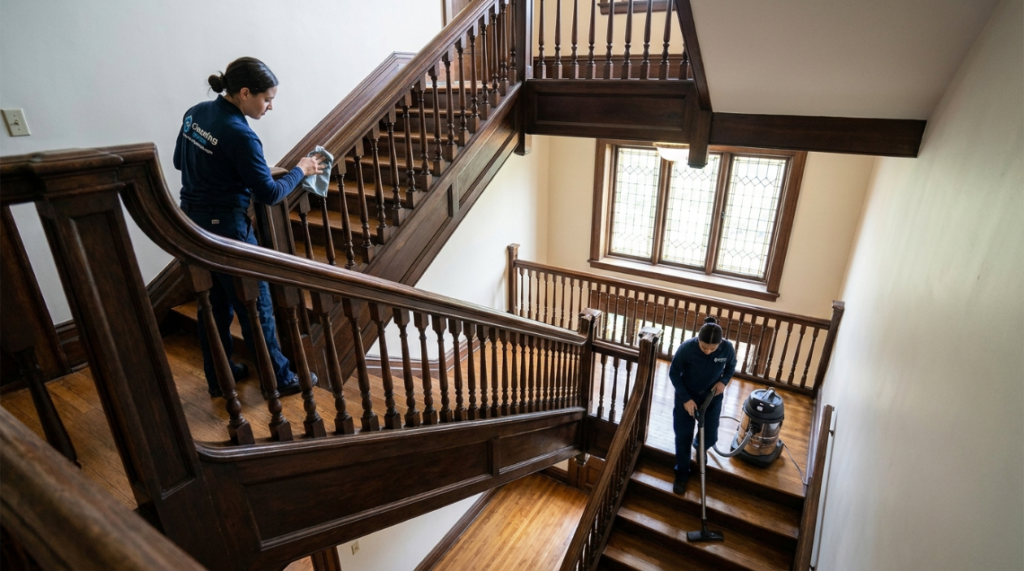
- Number of levels and staircases. Every additional level adds equipment hauling and a full stair treatment, which is slow, detailed work. Common mistake: forgetting to mention a finished third floor or a back service staircase.
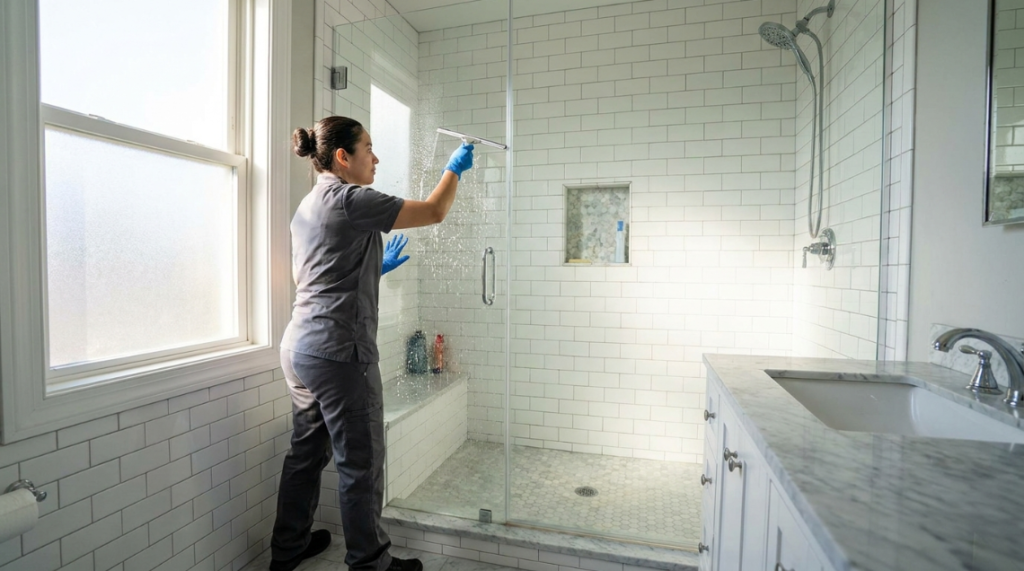
- Bathroom count. Bathrooms are the most labor dense rooms in any house. Five bathrooms can outweigh 1,500 extra square feet of bedroom space. Common mistake: counting only the ones in daily use.
- Specialty surfaces. Marble, unsealed stone, original hardwood and slate need specific products and slower methods. Common mistake: assuming a standard all purpose cleaner is fine, which is how marble gets etched and old hardwood gets dulled.
- Occupancy and pets. More people and more animals mean more frequent reuse of kitchens and bathrooms, plus hair and dander throughout. Common mistake: scoping a house of six the same way as a house of two.
- Time since the last professional clean. First visits to homes that have gone months without service typically run 50 to 100 percent longer as crews work through accumulated buildup. Common mistake: judging the ongoing schedule by how long that first visit took.
The table below compares a typical mid-size home with a large Main Line property of the kind we work in every week.
| Scope element | Mid-size home (about 2,000 sq ft) | Large Main Line home (4,000 to 6,000 sq ft) |
|---|---|---|
| Typical crew | 1 technician | 2 to 4 technicians working zones |
| Levels served | 1 to 2 | 3 or more, often plus a finished basement |
| Staircases treated | 1 | 2 or more, main and service |
| Bathrooms | 1.5 to 2.5 | 4 to 7 |
| Specialty surfaces | Occasional, usually one countertop | Common: marble, slate, original hardwood, stone entry |
| Equipment moved between floors | Once | Multiple times, or a second set staged upstairs |
If your house sits in the right hand column, the plan has to be built around it rather than adapted from a standard checklist. Our team can walk your home and map the scope before anything is booked.
How Long Does It Take to Clean a 5,000 Square Foot House?
A house in that range generally takes a professional crew between four and a half and ten hours of clock time, depending on condition and how many technicians are on site. Deep cleaning at the upper end of the sizes our Main Line crews handle can run considerably longer, especially in houses with four or more bedrooms that have gone without recent professional service.
Two numbers get confused here. Clock time is how long the crew is in your house. Person hours are the total labor delivered. A three person crew finishing in five hours delivers fifteen person hours, which no single cleaner could produce in a day. Larger crews shorten your disruption without shrinking the cleaning.
Crew sizing follows the house. Two technicians handle 3,000 to 4,000 square feet. Three become standard between 4,000 and 6,000 square feet, or once a home has five or more bathrooms. Four are used above 6,000 square feet or where specialty surface work is heavy. Our guide on deep cleaning explains how a full reset differs from a maintenance visit.
Expect the first visit to be the outlier. First cleans commonly run two to three times longer than an ongoing recurring visit in the same house. That is not a scoping error. It is the crew clearing accumulated work so later visits stay on schedule.
Where a Full Scope Clean Makes Sense, and When It Does Not
A full scope clean earns its place in specific situations. A stone manor in Gladwyne with a marble island and a flagstone entry needs someone who knows which products to keep away from both. A Colonial in Wayne with a finished third floor and a back staircase needs a crew that plans equipment staging instead of carrying a vacuum up and down four times. A Villanova property hosting family for the holidays needs guest suites and powder rooms brought up at once, which is a crew job.
It fits a recurring rhythm well. Households in Radnor and Haverford that keep a steady schedule find visits get shorter and more predictable after the first two, because the crew is maintaining rather than recovering. Our guide on house cleaning across Pennsylvania compares how we serve different parts of the state.
There are times when it is not the right call:
- You only need one or two rooms addressed. A targeted visit is a better fit than full scope.
- The house is mid renovation. Dust will keep landing. Post construction cleaning after the work finishes is the sequence that actually holds.
- Stone or hardwood needs restoration, not cleaning. Etched marble and worn finishes are refinishing work. Cleaning maintains a surface, it does not restore one.
- You are moving out next month. A move out clean has a different checklist and a different endpoint.
What a Large Home Clean Looks Like in Practice
Here is a composite example, drawn from the kind of home we handle regularly rather than from one named client. Picture a 5,200 square foot Tudor in Bryn Mawr: three levels plus a finished basement, six bathrooms, a marble kitchen island, original oak on the second floor, and no professional cleaning for seven months.
The walkthrough changes the plan in three places. The oak upstairs moves to a dry method rather than a standard mop. The marble island gets a pH neutral product instead of the general purpose spray used on quartz. The service staircase, never mentioned on the phone, adds a full stair treatment nobody had estimated.
A three person crew runs it in zones: one on bathrooms, one on kitchen and living areas, one on floors and stairs across levels. The first visit runs long, as first visits do. By the third recurring visit the house finishes inside a predictable window, because the crew is holding a standard instead of rebuilding one. That consistency is the pattern clients mention most in our Google and Yelp reviews.
You can see where we serve on our Google Business Profile, and read what homeowners across the Wilmington and Main Line area have said on our Yelp listing.
Frequently Asked Questions
Is a deep clean the same as a large home cleaning?
No. A deep clean describes how thorough the work is. A large home cleaning describes the size and complexity of the property. The same house can receive either one, and they are scoped differently: a deep clean adds tasks, while a large home clean changes crew size and zone planning.
Can you skip unused rooms in a large house to shorten the visit?
You can, but the savings are smaller than most homeowners expect. Most of the labor sits in kitchens, bathrooms, floors and stairs, and that work happens regardless of how many bedrooms are in scope. Closing off two guest rooms shortens the visit modestly. Removing a bathroom changes it far more.
How often should a large Main Line home be professionally cleaned?
Most large households settle on weekly or every other week, with the interval driven by occupancy rather than square footage. A house of six with pets accumulates faster than a house of two at the same size. Monthly works, but each visit runs longer, because four weeks of buildup turns maintenance into a partial reset.
Why does the first cleaning of a large home take so much longer?
The first visit clears accumulated work that later visits never face. Homes that have gone months without professional service commonly take 50 to 100 percent longer on that first clean, and sometimes two to three times as long as a routine visit. Judge your ongoing schedule by the second and third visits, not the first.
What determines the scope of a large home cleaning?
Six factors: total floor area, levels and staircases, bathroom count, specialty surfaces such as marble or original hardwood, occupancy including pets, and time since the last professional clean. Square footage is the weakest of the six. A walkthrough is how a company assesses all of them accurately.
What should you ask a cleaning company before booking a large home?
Ask five things. How many technicians will be here and how are they assigned? What products do you use on marble, stone and unsealed hardwood? How do you handle stairs and equipment between levels? How much longer will the first visit run? Will I have the same crew each time?
Booking Your First Visit
House cleaning large homes Main Line PA homeowners can rely on starts with an honest look at the house, not a number on a form. Six factors set the scope. Square footage is only one, and the ones missed most often are staircases, bathroom count and specialty surfaces.
If you own a large home in Bryn Mawr, Villanova, Haverford, Wayne, Radnor, Gladwyne, Malvern or Paoli, we will walk the property, map the scope with you and build the plan around how your house is actually built. Get in touch to schedule your walkthrough.
